What is the cheapest way to drive from NYC to Detroit MI in 2026?
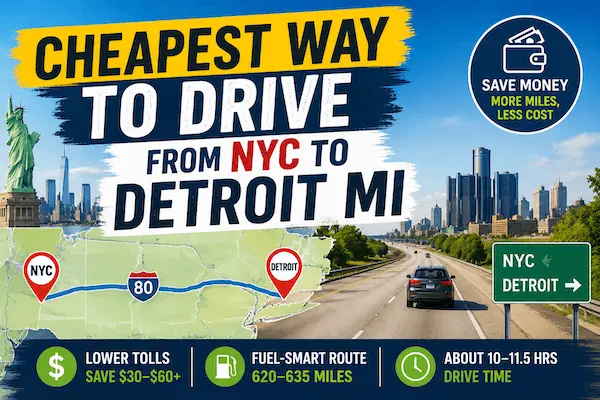
The cheapest way to drive from New York City to Detroit in 2026 is usually to prioritize avoiding major toll roads, maintain efficient highway speeds (55–65 mph), and fuel up in lower-cost areas of Pennsylvania or Ohio rather than in New York City. The trip is roughly 620–635 miles and takes about 10–11.5 hours of driving time.
Cheapest Route:
A common low-cost route is:
I-80 West through Pennsylvania → Ohio Turnpike area → I-75 North into Detroit
This route generally minimizes toll expenses compared with using the Pennsylvania Turnpike (I-76), which many drivers report is significantly more expensive. Community discussions frequently recommend I-80 for travelers focused on keeping costs down.
Estimated 2026 Driving Costs (One Way)
| Expense | Estimated Cost |
|---|---|
| Fuel (30 mpg vehicle) | $75–$90 |
| Fuel (25 mpg vehicle) | $95–$120 |
| Tolls (cost-conscious route) | $10–$30 |
| Tolls (faster toll-heavy routes) | $40–$100+ |
| Total Cheapest Practical Cost | $85–$120 |
Fuel-only estimates for an average 25 mpg vehicle are around $99–$117 one way, depending on gas prices.
Money-Saving Tips:
Use Google Maps or Waze with “Avoid Tolls” enabled.
Leave NYC before rush hour to avoid stop-and-go traffic that hurts fuel economy.
Keep tire pressures properly inflated.
Drive around 60–65 mph; fuel consumption rises noticeably above 70 mph.
If traveling with others, splitting costs can reduce per-person transportation costs to under $30–$40 each.
Cheapest vs Fastest
| Option | Typical Cost | Notes |
|---|---|---|
| I-80-focused route | Lowest | Best balance of fuel and toll savings |
| Pennsylvania Turnpike (I-76) | Higher | More tolls but sometimes slightly faster |
| Canada route | Usually not cheapest | Additional border considerations and longer distance for most NYC travelers |
For most drivers in 2026, the I-80 route through Pennsylvania is usually the lowest-cost way to drive from NYC to Detroit while keeping total one-way expenses near $100–$120 in a typical gasoline sedan.
How to Get to Detroit MI from NYC by Train, Flight in 2026?
Traveling from New York City (NYC) to Detroit, Michigan in 2026 is easiest by either flight or train, depending on your budget and schedule. A direct flight covers approximately 480 miles (772 km) and typically takes 1 hour 45 minutes to 2 hours, making it the fastest option. Economy fares usually range from $70 to $250 one way when booked in advance, while last-minute tickets can exceed $300. With airport security, boarding, and transportation to and from airports, total travel time is generally 4 to 6 hours.
For travelers looking to avoid flying, Amtrak train service connects NYC and Detroit via routes that usually require a transfer. The rail journey covers roughly 620 to 700 miles and takes about 15 to 18 hours, depending on connections and schedules. Train fares in 2026 are expected to range from $80 to $220 one way, with lower prices available for early bookings. While the train takes significantly longer than flying, it offers more legroom, scenic views, and avoids airport security lines.
In terms of cost versus time, flights provide the best balance for most travelers because they save 12 to 16 hours compared to rail travel while often costing a similar amount. Budget-conscious travelers who book early may find train tickets competitive, especially during peak holiday periods when airfares rise.
For a typical 2026 trip from NYC to Detroit, expect to spend $70–$250 and 4–6 total hours by flight, or $80–$220 and 15–18 hours by train, making flying the preferred option for speed and train travel the better choice for a relaxed journey.
Toll Cost for Road Trip from NYC to Detroit MI in 2026
A road trip from New York City to Detroit, Michigan covers approximately 620 to 635 miles, and toll costs in 2026 depend heavily on the route you choose. Drivers using the faster route through the New Jersey Turnpike, Pennsylvania Turnpike, and Ohio Turnpike can expect to pay roughly $45 to $90 in one-way tolls for a standard passenger vehicle, with electronic toll passes such as E-ZPass typically offering lower rates than cash or pay-by-mail options. For a round trip, toll expenses can reach $90 to $180.
Travelers looking to reduce costs can use Interstate 80 through Pennsylvania, which bypasses much of the expensive Pennsylvania Turnpike system. On this lower-cost route, toll charges are often reduced to around $10 to $30 one way, although driving time may increase by 30 to 60 minutes depending on traffic and road conditions. The savings can be significant for families or budget-conscious travelers.
When planning a 2026 NYC-to-Detroit road trip, tolls should be considered alongside fuel expenses. A typical gasoline vehicle averaging 25 to 30 mpg will spend approximately $75 to $120 on fuel one way, meaning tolls can account for 10% to 45% of total transportation costs.
Drivers seeking the lowest overall travel cost should compare toll-heavy routes against fuel-efficient alternatives, as avoiding major turnpikes can save $30 to $60 per trip without adding substantial travel time.
Related Routes from New York City:
Cost of Driving from NYC to Frisco, TX
Cost of Driving from NYC to El Paso TX
EV Charging Cost Vs Gas Cost from NYC to Detroit MI in 2026
Driving from New York City to Detroit, Michigan covers approximately 620 to 635 miles, making fuel or charging costs a major part of the trip budget. In 2026, a typical electric vehicle (EV) consuming 28 to 32 kWh per 100 miles would use about 175 to 200 kWh for the journey. At average home electricity rates, the charging cost is roughly $30 to $40 one way, while relying primarily on public DC fast chargers can increase the cost to approximately $70 to $110.
For a gasoline vehicle averaging 25 to 30 mpg, the same NYC-to-Detroit trip requires about 21 to 25 gallons of fuel. With 2026 gasoline prices generally ranging from $3.00 to $4.00 per gallon, drivers can expect to spend approximately $65 to $100 on gas one way.
The biggest savings come when EV owners charge mostly at home before departure and top up only when necessary during the trip. In that scenario, an EV road trip from NYC to Detroit can cost 40% to 60% less than driving a comparable gasoline vehicle. However, if the trip depends heavily on premium fast-charging stations, the cost advantage narrows, and total charging expenses may approach gasoline costs.
For most 2026 travelers, the estimated one-way energy cost is $30–$40 for home-charged EVs, $70–$110 for fast-charged EVs, and $65–$100 for gasoline vehicles, making home-charged EV travel the most economical option.