Cost of Driving from NYC to Peoria, IL in 2026
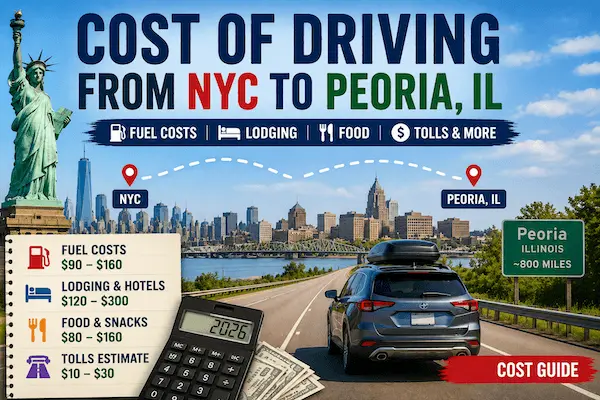
The cost of driving from NYC to Peoria, IL in 2026 typically ranges from $250 to $900+, depending on your vehicle type, fuel prices, lodging needs, food expenses, and tolls. The trip covers approximately 800 to 900 miles and usually takes 13 to 15 hours of driving time, making it possible to complete in one long day or with an overnight stop.
For a traditional gasoline vehicle, fuel costs generally range from $90 to $160, while electric vehicles may spend $40 to $100 on charging, depending on whether home charging or public fast chargers are used. Travelers who choose to stay overnight should budget $80 to $250 for lodging, while food and snacks can add another $30 to $150 per person. Toll charges along common routes through New York, Pennsylvania, Ohio, and Illinois typically range from $10 to $30.
Overall, careful planning can keep the total road trip cost low, while travelers seeking added comfort and convenience should expect higher expenses. Driving from New York City to Peoria remains one of the most affordable long-distance road trips in the Midwest in 2026.
Driving Distance & Time from New York, NY to Peoria, IL
The driving distance from New York, NY to Peoria, IL is approximately 850 to 900 miles (1,368 to 1,448 km), depending on the route taken. The journey typically requires 13 to 15 hours of driving time under normal traffic and weather conditions.
Most travelers follow major interstate highways through Pennsylvania, Ohio, Indiana, and Illinois, making it a straightforward road trip across the Midwest. If you plan to drive without extended stops, the trip can be completed in a single day. However, many travelers prefer an overnight stay to make the journey more comfortable.
For those comparing travel options, the road trip offers flexibility and sightseeing opportunities, while flights between New York and nearby Illinois airports are faster but may require additional transportation to reach Peoria. In 2026, driving remains a popular option for travelers seeking convenience, luggage flexibility, and the freedom to explore attractions along the route.
Electric Vehicle (EV) Charging Cost: from New York, NY to Peoria, IL in 2026
The Electric Vehicle (EV) charging cost from New York, NY to Peoria, IL in 2026 typically ranges from $40 to $100 for a one-way trip of approximately 850 to 900 miles. The total cost depends on your EV’s efficiency, battery size, weather conditions, and whether you rely on home charging, public Level 2 chargers, or DC fast chargers.
Drivers who start with a full battery charged at home may spend only $8 to $20 on their initial charge, while most of the trip’s energy costs come from public fast-charging stations. Using Tesla Superchargers or other DC fast chargers generally results in total charging expenses between $50 and $100, while combining home charging with lower-cost public chargers can reduce costs significantly.
Compared with a gasoline vehicle that may spend $90 to $160 on fuel for the same route, EV drivers can often save money on energy costs while enjoying a quieter and more efficient road trip. For many travelers in 2026, driving an electric vehicle from New York City to Peoria, Illinois remains one of the most cost-effective transportation options.
Gas Prices Along the Route: from New York, NY to Peoria, IL in 2026
Gas prices along the route from New York, NY to Peoria, IL in 2026 typically range from $3.00 to $4.50 per gallon, depending on the state, local taxes, and market conditions. Drivers traveling through New York, Pennsylvania, Ohio, Indiana, and Illinois may notice gradual price differences, with fuel often costing more in major metropolitan areas and along busy interstate corridors.
For a vehicle averaging 25 to 30 MPG, the approximately 850 to 900-mile trip usually requires 30 to 36 gallons of gasoline. Based on average fuel prices, most travelers can expect total fuel expenses of $90 to $160 for a one-way journey.
To save money, consider filling up in areas with lower fuel taxes, avoiding premium fuel unless required by your vehicle, and using gas price comparison apps before reaching major cities. Planning fuel stops strategically can help reduce overall road trip costs while traveling from New York City to Peoria, Illinois in 2026.
Toll Charges/Avoid Toll from New York, NY to Peoria, IL in 2026
Drivers traveling from New York, NY to Peoria, IL can expect to pay approximately $10 to $40 in toll charges in 2026, depending on the route, vehicle type, and toll payment method. Most toll costs occur in New York, Pennsylvania, Ohio, and parts of Illinois, where major interstate highways and turnpikes charge toll fees.
If you’re looking to avoid tolls, navigation apps such as Google Maps, Waze, and Apple Maps offer an “Avoid Tolls” setting that can automatically route you along toll-free roads. Choosing toll-free routes may add a small amount of driving time, but it can significantly reduce travel expenses, especially for budget-conscious road trippers.
For most travelers, toll costs represent only a small portion of the total trip budget compared to fuel, food, and lodging expenses. However, planning ahead and using toll-free alternatives can help lower the overall cost of driving from New York City to Peoria, Illinois in 2026.
Related Routes/Journey from New York City:
NYC to Portland OR Driving Cost, Avoid Tolls
From NYC to Salem, OR Driving Cost, Avoid Tolls
FAQs About Cost of Driving from NYC to Peoria, IL in 2026
How much does it cost to drive from NYC to Peoria, IL in 2026?
The total driving cost typically ranges from $250 to $900+, depending on fuel or charging costs, hotel stays, food expenses, tolls, and the type of vehicle you drive.
What is the driving distance from NYC to Peoria, IL?
The trip covers approximately 850 to 900 miles, depending on the route selected through New York, Pennsylvania, Ohio, Indiana, and Illinois.
How long does it take to drive from New York City to Peoria?
Most drivers need about 13 to 15 hours of driving time. The trip can be completed in one day or split into two days with an overnight stop.
How much will I spend on gas for the trip?
A gasoline-powered vehicle typically spends $90 to $160 on fuel for a one-way journey, depending on gas prices and fuel efficiency.
What is the EV charging cost from NYC to Peoria, IL?
Electric vehicle charging costs generally range from $40 to $100, with lower costs possible when starting with a full home charge.
Are there tolls between NYC and Peoria?
Yes. Drivers can expect toll charges of approximately $10 to $40, depending on the route and toll payment method used.
How can I avoid toll roads on the route?
Most GPS navigation apps offer an “Avoid Tolls” option, allowing travelers to use alternative routes that reduce or eliminate toll expenses.
How much should I budget for hotels?
If you choose to stay overnight, hotel costs typically range from $80 to $250 per night, depending on the property and location.
What are the expected food and snack costs?
Food and snack expenses generally range from $30 to $150 per person for the trip, depending on dining preferences and travel duration.
Is driving cheaper than flying from NYC to Peoria?
Driving can be more economical for families, groups, or travelers carrying extra luggage, while flying is usually faster for solo travelers with limited baggage.